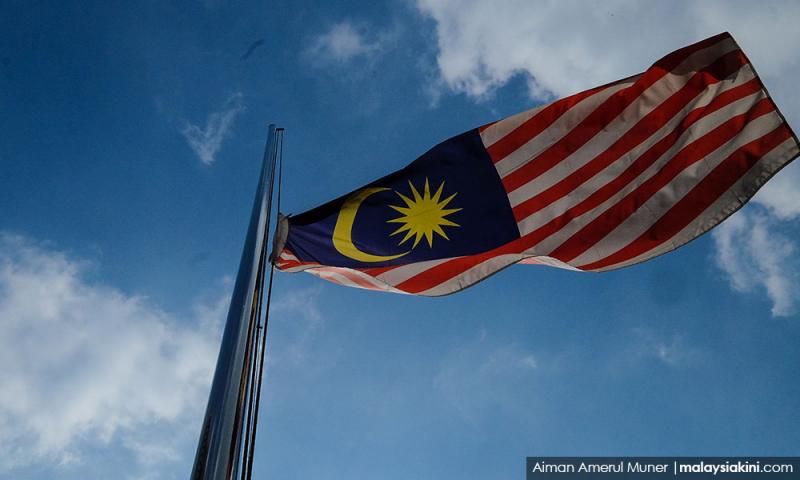

MP SPEAKS | Every Sept 16, we commemorate Malaysia Day not merely as a date on the calendar, but as a historic journey shaped by courage, negotiation, and a shared willingness to live together in diversity.
The idea of Malaysia was first proposed by Tunku Abdul Rahman Putra Al-Haj on May 27, 1961, bringing together the Federation of Malaya, Sabah, Sarawak, Singapore, and Brunei.
This was followed by the establishment of the Malaysia Solidarity Consultative Committee on July 23, 1961 and the Cobbold Commission on Jan 17, 1962, to ascertain the views of the people of Sabah and Sarawak.
The negotiation process eventually led to the signing of the Malaysia Agreement on July 9, 1963.
Although Malaysia was originally intended to be formed on Aug 31, the date was postponed to allow the United Nations verification process to be completed.
Finally, on Sept 16, 1963, Malaysia was proclaimed. At Stadium Merdeka in Kuala Lumpur, Tunku Abdul Rahman read the Proclamation of Malaysia before tens of thousands of people.
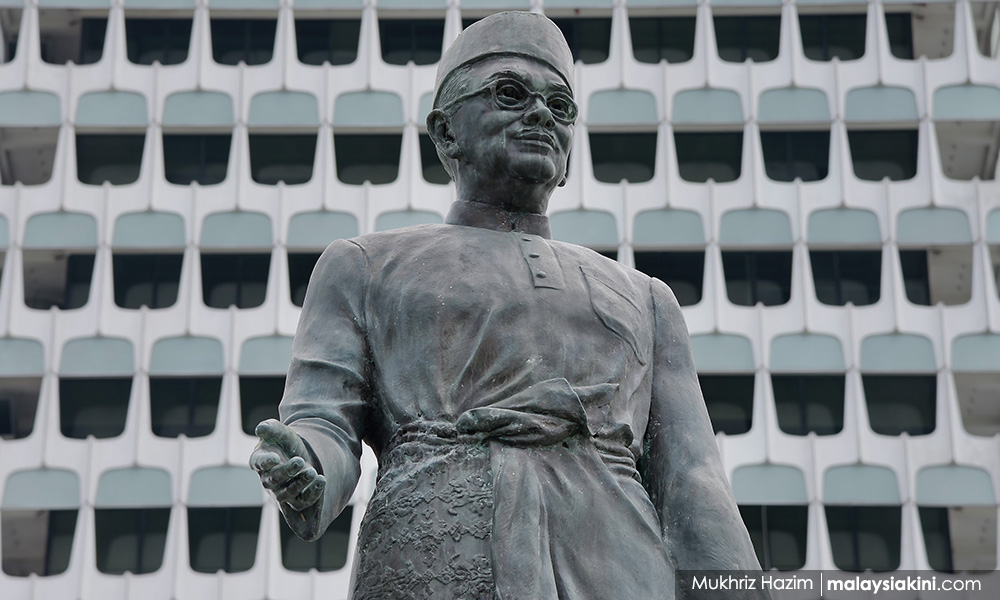
From an idea, Malaysia became a reality.
Diversity is strength
More than six decades later, the diversity upon which this nation was built remains one of our greatest strengths.
Malaysia is home to more than 200 ethnic and sub-ethnic groups, from the Malays, Kadazan, Dusun, Bajau, Murut, Iban, Bidayuh and Melanau, to the various Orang Asli communities, Chinese, Indians, as well as the Siamese, Baba Nyonya, Chitty, and Portuguese-Eurasian communities.
We may differ in language, culture, religion, customs and cuisine. Yet these differences should never divide us. We do not need to be the same to be one.
In the digital age, the challenges to unity have also evolved. A small incident can escalate within moments when it is recorded, circulated, and taken out of context.
Misunderstanding, misinformation, and provocation can travel faster than our efforts to build understanding.

Yet, we must look at the facts. The National Unity Index 2025 recorded a score of 0.701, an increase from 0.629 in 2022 and 0.567 in 2018. This demonstrates that the foundations of national unity continue to strengthen, although much remains to be done.
For this reason, the National Unity Ministry prioritises prevention, mediation, and dialogue.
We have 596 trained community mediators, the Unity Issues Management Committee, involving 12 government agencies, the National Community Complaints Network, and the Unity Analytics Dashboard serving as an early-warning mechanism.
Our principle is simple: identify tensions before they become conflicts.
Unity is not sameness
However, unity is not merely about managing issues related to the 3Rs. We must also address the various social deficits that exist across education, language, generations, social classes, politics, the urban-rural divide, and the media.
Under the 13th Malaysia Plan, we seek to strengthen our shared identity, deepen the appreciation of the Rukun Negara, expand opportunities for interaction between communities, and cultivate a stronger sense of belonging to our homeland.
If previous generations worked to build Malaysia, the responsibility of our generation is to strengthen Malaysia.

We do not aspire to be a nation where everyone thinks in the same way. We aspire to build a Malaysia where we can disagree without being divided, speak without hatred, and defend our own identity without diminishing the identity of others.
Being Malay, Chinese, Indian, Iban, Kadazan, Dusun, Bidayuh, Orang Asli, or belonging to any other community has never been incompatible with being Malaysian. On the contrary, our diversity is our strength.
Unity cannot be defended only in times of crisis; it must be built every day. We must move from merely managing diversity to building togetherness.
From simply preventing division, we must strengthen our sense of belonging. And from merely living alongside one another, we must build our future together.
On this Malaysia Day, let us embrace the spirit that united the generations before us and that our differences are not a reason to stand apart, but a source of strength that enables us to stand together.
AARON AGO DAGANG is National Unity Minister and Kanowit MP.
The views expressed here are those of the author/contributor and do not necessarily represent the views of Malaysiakini.